
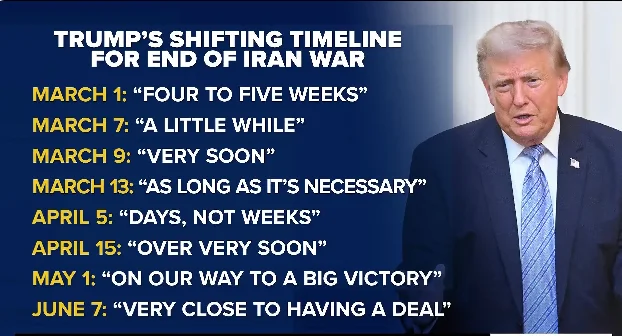
Six months after the Iran war began, the conflict has entered a dangerous stalemate. As the US shifts from military strikes to economic pressure and a naval blockade, Iran continues to resist while Gulf states fear a prolonged regional crisis.
Key Highlights
- The Iran war has entered a costly and dangerous stalemate after six months of conflict.
- Iran’s leadership remains in power despite major military losses and severe economic pressure.
- The Trump administration is shifting its strategy from airstrikes towards sanctions and economic warfare.
- A US-led naval blockade is restricting Iranian oil exports and access to foreign currency.
- Iran is betting that China, India and other trading partners will continue economic cooperation.
- Growing economic hardship could increase the risk of domestic unrest inside Iran.
- Gulf nations fear a prolonged conflict and possible disruption to shipping and energy infrastructure.
- The Strait of Hormuz remains at the centre of growing regional tensions.
After Six Months, the Iran War Has Reached a Dangerous Stalemate
Six months after the outbreak of the Iran war, the conflict appears to be entering a difficult and potentially dangerous endgame.
The military campaign launched by the United States and Israel has caused significant damage to Iran’s military capabilities and political leadership. However, despite intense pressure, Iran’s government remains firmly in control.
Instead of producing a decisive outcome, the conflict has increasingly turned into a costly stalemate.
The battlefield is now changing. Airstrikes and missiles are gradually being replaced by economic sanctions, restrictions on oil exports and growing pressure on countries that continue trading with Tehran.
According to a Reuters analysis published on August 27, Iran’s leaders appear to believe that time is on their side. Their calculation is that the United States may struggle to maintain maximum pressure indefinitely without escalating the conflict further.
Trump Shifts Strategy From Airstrikes to Economic Warfare
The latest phase of the Iran conflict is focused heavily on economic pressure.
US President Donald Trump’s administration has announced new measures targeting Iran’s financial system, oil revenues and international trading networks. The objective is to cut off the financial resources that allow Tehran to continue operating despite years of sanctions.
US Treasury Secretary Scott Bessent has said Washington intends to target the financial lifelines supporting the Iranian economy.
At the same time, a US-led naval blockade has added another layer of pressure by restricting Iran’s ability to export oil and gain access to foreign currency.
However, some analysts believe that sanctions alone may not be enough to force a major change in Iranian policy.
Aaron David Miller, a former US diplomat and senior fellow at the Carnegie Endowment, questioned whether Washington currently has a clear strategy for ending the confrontation.
His criticism reflects a wider concern that the United States may be increasing pressure without yet having a clear diplomatic route towards a lasting settlement.
Can Sanctions Force Iran to Change Its Course?
One of the biggest questions surrounding the Iran war is whether economic pressure can achieve what military action has failed to accomplish.
Iran has spent decades living under different forms of international sanctions. Its economy has suffered heavily, but the country’s leadership has repeatedly adapted to restrictions and developed alternative trading networks.
The current US strategy also faces a major challenge involving Iran’s international partners.
Washington may need to aggressively enforce secondary sanctions against countries and businesses that continue trading with Tehran. This could potentially create diplomatic tensions with major economies that maintain commercial links with Iran.
China remains particularly important because of its role in purchasing Iranian oil and maintaining economic connections with Tehran.
India and other countries could also become increasingly important as Washington attempts to restrict Iran’s remaining economic options.
Iranian officials appear confident that major trading partners will not simply abandon economic cooperation because of US pressure.
This could make enforcement of the sanctions campaign considerably more difficult.
Naval Blockade Could Become More Important Than Sanctions
Some security analysts believe the naval blockade could have a greater immediate impact on Iran than financial sanctions.
Michael Knights, head of research at Horizon Engage, has argued that Iran’s challenge is no longer simply surviving economic pressure.
Instead, Tehran is now looking for ways to break out of the restrictions imposed by Washington and its allies.
Iran has repeatedly demonstrated its ability to survive under severe economic sanctions. However, restrictions on shipping routes and oil exports could directly affect its ability to generate revenue.
This raises the possibility that Tehran could attempt to increase pressure elsewhere in the region.
Possible Areas of Escalation Could Include:
- Commercial shipping routes
- Major ports
- Oil and gas infrastructure
- Energy facilities
- Maritime trade corridors
- Strategic waterways
Such actions could increase the economic cost of the conflict for Iran’s regional opponents.
Iran May Turn to Disruption Rather Than Full-Scale War
One possible Iranian strategy could involve avoiding another major conventional war while maintaining continuous pressure on its opponents.
Analysts believe Tehran could adopt a strategy based on periodic disruption rather than large-scale military escalation.
This could include limited attacks, political negotiations and strategic pressure designed to make the conflict increasingly expensive for countries in the Gulf region.
The approach would resemble a prolonged campaign of disruption rather than a traditional war with a clear beginning and end.
Iran’s allies, including the Houthis in Yemen, have previously demonstrated how relatively limited attacks on shipping can create significant economic and geopolitical consequences.
For Gulf governments, this creates a difficult situation.
They want to avoid another major war, but they also fear that a long period of instability could damage trade, investment and energy production.
Washington Says the Balance of Power Remains in Its Favour
The United States strongly rejects suggestions that its strategy is failing.
American officials argue that Iran’s economy is under extreme pressure and that the country’s military capabilities have suffered significant damage during the conflict.
Washington believes the combination of military pressure, economic sanctions and restrictions on oil exports will eventually weaken Iran’s ability to continue resisting.
The Trump administration has insisted that it intends to cut off the remaining financial channels supporting Tehran.
However, the central question remains whether economic damage alone can force Iran’s leadership to change its strategic behaviour.
History suggests that sanctions can weaken an economy significantly without necessarily causing a government to abandon policies it considers essential to its survival.
Countries facing severe international pressure often adapt by strengthening internal control, developing alternative trade networks and seeking support from sympathetic international partners.
Iranian Officials Dismiss America’s Pressure Strategy
Iranian officials have reportedly dismissed the latest US campaign as a repeat of previous attempts to apply “maximum pressure”.
Tehran believes that economic sanctions have failed to fundamentally change the behaviour of the Iranian leadership in the past.
One major difference between the current strategy and earlier international negotiations is the level of international cooperation.
The diplomatic campaign that eventually led to the 2015 Iran nuclear agreement involved extensive negotiations between Tehran and several major world powers.
That agreement placed restrictions on Iran’s nuclear programme in exchange for sanctions relief.
The current situation is considerably different.
Rather than a broad multilateral diplomatic process, the latest campaign relies heavily on US economic pressure and threats of penalties against countries continuing to trade with Iran.
Some former diplomats have questioned whether Washington has enough international support to successfully enforce such a strategy over the long term.
Economic Crisis Creates Growing Pressure Inside Iran
While external pressure may not immediately change the behaviour of Iran’s rulers, the country’s worsening economic situation could create serious challenges at home.
Iran has experienced soaring inflation, falling incomes and rapidly increasing food prices.
According to figures cited in the Reuters report, annual inflation reached 66% in July, while consumer prices were significantly higher than the previous year.
Food prices have been rising particularly sharply.
For ordinary Iranian families, the impact of the economic crisis is becoming increasingly difficult.
Iran’s Economic Challenges Include:
- Rapid inflation
- Rising food prices
- Falling household incomes
- Currency pressures
- Reduced oil revenues
- Restricted access to foreign currency
- International banking sanctions
- Higher costs of imported goods
President Masoud Pezeshkian has publicly acknowledged the seriousness of the country’s economic difficulties.
However, economic hardship does not automatically lead to political change.
That remains one of the major uncertainties surrounding the Iran war.
Could Economic Pain Trigger New Protests in Iran?
Iran has experienced repeated waves of protests in recent years.
Economic hardship, rising living costs and political frustration have previously triggered demonstrations across the country.
The Iranian authorities have responded to previous unrest with strong security measures.
The leadership appears particularly concerned that worsening economic conditions could create another major wave of public protests.
The appointment of senior security figures to important positions within the Basij paramilitary organisation has been interpreted by some observers as a sign that the government is preparing for the possibility of renewed domestic unrest.
However, there is a major paradox facing the US strategy.
Economic pressure could increase public frustration, but it could also lead the Iranian leadership to strengthen repression rather than change its foreign policy.
This means sanctions could cause significant suffering for ordinary citizens without necessarily producing the political outcome Washington hopes to achieve.
The Strait of Hormuz Remains a Major Flashpoint
One of the biggest concerns surrounding the Iran conflict is the future of the Strait of Hormuz.
The strategic waterway is one of the world’s most important routes for global energy supplies.
Any prolonged disruption in the Strait of Hormuz can affect international oil markets, shipping costs and global energy prices.
Iran has historically viewed its geographical position around the waterway as an important source of strategic leverage.
For the United States and Gulf nations, preventing long-term disruption to maritime traffic remains a major priority.
The current standoff has created a complicated situation.
Washington Wants:
- Iran to reduce its influence over the Strait of Hormuz.
- Maritime trade routes to remain open.
- Iran’s economic leverage to be weakened.
- A reduction in regional military threats.
Iran Wants:
- The US-led naval blockade to be lifted.
- Greater freedom to export oil.
- Access to international financial systems.
- Recognition of its strategic influence in the region.
Gulf States Want:
- Regional stability.
- Protection for oil and energy infrastructure.
- Secure shipping routes.
- A diplomatic solution that avoids another major war.
These competing objectives have made negotiations extremely difficult.
Gulf States Fear a Long Stalemate More Than Another Short War
For Gulf governments, the current situation presents a serious strategic dilemma.
Another large-scale military conflict would be dangerous and destructive.
However, a prolonged stalemate may also create significant long-term risks.
A continuing cycle of sanctions, naval restrictions, limited attacks and political negotiations could leave the entire region trapped in a state of permanent instability.
Countries such as Saudi Arabia have invested heavily in economic diversification, infrastructure and international investment.
Long-term regional insecurity could threaten these ambitions.
Gulf governments therefore have strong reasons to support diplomatic efforts aimed at ending the confrontation.
At the same time, they do not want a settlement that allows Iran to claim a major strategic victory.
This balancing act makes the search for peace particularly complicated.
Mediation Efforts Could Become the Only Way Out
With military action failing to produce a decisive victory and sanctions unlikely to create immediate political change, diplomacy may become increasingly important.
Regional countries, including Qatar and Oman, have previously played important roles in mediation efforts involving Iran and Western powers.
Any future agreement would likely require difficult compromises from all sides.
The United States would want security guarantees and reduced Iranian influence over strategic waterways.
Iran would demand an end to economic restrictions and naval pressure.
Meanwhile, Gulf states would seek assurances that their shipping routes, ports and energy infrastructure will not become targets.
The challenge is finding a solution that allows all sides to step back without appearing to surrender.
That may prove to be the most difficult part of ending the Iran war.
Why the Iran War Has Become a Costly Stalemate
After six months of fighting and escalating economic pressure, neither side appears close to achieving all of its objectives.
Iran has suffered serious military and economic damage but remains politically intact.
The United States and Israel have demonstrated overwhelming military capabilities but have not forced a complete change in Tehran’s behaviour.
Sanctions are increasing economic pain, but Iran continues to rely on international trading relationships and alternative economic networks.
Meanwhile, the Gulf region remains exposed to the possibility of further disruption.
The result is a strategic deadlock.
Neither side wants to make major concessions, but neither side appears able to achieve a decisive victory without accepting enormous additional risks.
What Happens Next in the Iran Conflict?
The next stage of the Iran war is likely to depend on three major factors.
1. The Success of US Economic Pressure
The effectiveness of sanctions will depend heavily on whether Washington can restrict Iran’s international trade and oil exports.
Much will depend on the willingness of other countries to cooperate with US restrictions.
2. Iran’s Response to the Blockade
Tehran could choose to wait and absorb the economic pressure.
Alternatively, it could attempt to increase the cost of the confrontation through regional disruption.
Any escalation involving shipping routes or energy infrastructure could significantly increase international pressure for negotiations.
3. The Possibility of Diplomatic Breakthrough
Mediation may ultimately provide the only realistic route out of the current stalemate.
However, negotiations will remain difficult as long as both Washington and Tehran believe that time is working in their favour.
Final Thoughts: A Dangerous Impasse With No Clear Winner
Six months after the Iran war began, the conflict has moved from intense military confrontation towards a more complicated struggle involving sanctions, oil exports, naval power and regional influence.
Iran remains under enormous pressure but has not collapsed.
The United States has shifted towards economic warfare but faces major questions about whether sanctions can achieve decisive political results.
Gulf nations are increasingly concerned about becoming trapped in the middle of a prolonged confrontation that threatens shipping, energy markets and regional stability.
The greatest danger may not be another immediate full-scale war.
Instead, it may be a long and unpredictable stalemate where neither side is willing to retreat, while the economic and geopolitical costs continue to rise.
For now, the Iran conflict remains locked in what analysts increasingly describe as a dangerous impasse — one where diplomacy may offer the best path forward, but where a lasting compromise remains difficult to achieve.
Sources and References
- Reuters – Iran and Middle East Coverage
- Reuters – Iran War Analysis, August 27, 2026
- Reuters – US Sanctions Campaign Against Iran’s Economy
- Reuters – Iran’s Trading Partners and Secondary Sanctions
- Reuters – Strait of Hormuz and Regional Tensions
- Reuters – Iran Economic Crisis and Risk of Unrest
For Health & Fitness Products, Click => http://tinyurl.com/5n872ptd