
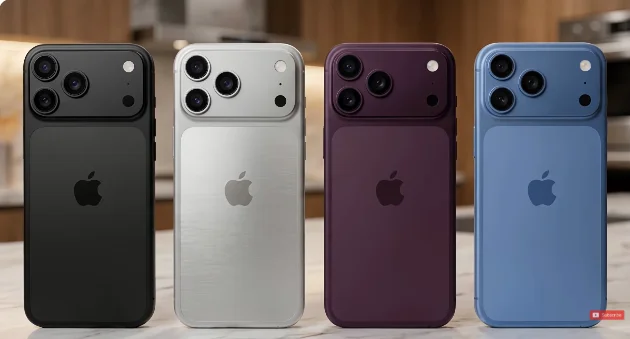
Apple’s next premium smartphone launch is shaping up to be one of the biggest events in the 2026 technology calendar. The iPhone 18 Pro and iPhone 18 Pro Max are widely expected to be unveiled in September, with Wednesday, 9 September 2026 currently seen as the most likely date.
Apple has not officially confirmed the launch date, so it is important to treat 9 September as an expected date rather than a confirmed one. However, the timing follows Apple’s familiar September iPhone strategy and could once again put enormous pressure on rival smartphone manufacturers.
The timing is particularly interesting because IFA Berlin 2026 runs from 4 to 8 September, immediately before the expected iPhone event. That gives Apple the opportunity to dominate technology headlines just as many Android manufacturers are trying to attract attention to their latest products.
iPhone 18 Pro Release Date: What We Know So Far
Apple has yet to announce an official launch date for the iPhone 18 Pro. Nevertheless, current reports and Apple’s historical launch pattern point strongly towards the first half of September.
The most widely discussed date is Wednesday, 9 September 2026. According to MacRumors, the date is particularly plausible because US Labor Day falls on Monday, 7 September, and Apple has previously held iPhone events on the Wednesday following the holiday.
If Apple follows a traditional schedule, the timeline could look something like this:
- 9 September: iPhone 18 Pro announcement
- 12 September: Possible pre-orders
- 18 September: Possible retail launch
- Alternative: Apple could instead hold its event on 15 September and launch the phones on 25 September.
These dates remain predictions until Apple sends its official event invitation.
Why Apple’s September Launch Matters So Much
The strength of Apple’s iPhone launch is not simply the product itself. The company has built a remarkably predictable annual marketing cycle around the iPhone.
Every September, technology journalists, retailers, carriers, investors and consumers turn their attention towards Apple’s newest smartphone.
That creates a powerful situation for Apple: competitors know when the iPhone is coming, but avoiding it completely can also be difficult.
A rival manufacturer can launch before Apple and enjoy several weeks of attention. However, once the new iPhone arrives, much of the technology world’s media coverage quickly shifts towards Apple.
This creates what can effectively be described as a last-mover advantage.
iPhone 18 Pro vs Android: The Last-Mover Advantage
Samsung and Google have already placed their major 2026 smartphone launches earlier in the year, meaning Apple could arrive after many of the year’s biggest Android announcements.
Google’s Pixel 11 family, for example, has already reached the market, giving the company an opportunity to build awareness before Apple’s September event.
Samsung has also used its summer product cycle for its latest flagship and foldable devices.
The problem for these manufacturers is simple: once the iPhone 18 Pro arrives, their previous announcements risk becoming yesterday’s technology news.
Apple therefore does not necessarily need to be first.
It can allow rivals to launch, generate publicity, establish their products and spend marketing budgets — and then arrive with an entirely new wave of attention.
IFA Berlin 2026 Faces a Difficult Timing Battle
The timing of IFA Berlin makes Apple’s expected September launch particularly interesting.
IFA Berlin takes place from 4 to 8 September 2026, bringing together more than 1,900 brands and showcasing products across consumer electronics, AI, smart-home technology and other technology categories.
IFA remains an important technology event, but Apple’s expected iPhone 18 Pro announcement comes immediately afterwards.
That could create a dramatic change in the technology news cycle.
During IFA:
- Manufacturers can introduce new devices.
- Journalists can preview new products.
- Android brands can announce hardware.
- Technology companies can showcase new innovations.
But only one day after IFA closes, Apple’s iPhone event could become the dominant story across the technology industry.
This does not mean Apple literally prevents IFA products from receiving coverage. Instead, the sheer global interest in a new iPhone can make it harder for smaller manufacturers and mid-range smartphone brands to maintain media attention.
Mid-Range Android Phones Could Feel the Pressure
The situation may be particularly difficult for manufacturers selling mid-range Android smartphones.
Flagship products from Samsung, Google and other major brands can afford substantial marketing campaigns. Smaller manufacturers, meanwhile, often depend heavily on technology publications, social media coverage and search traffic to generate awareness.
When Apple launches a new iPhone, those channels become extremely competitive.
The pressure is also arriving at a difficult time for smartphone manufacturers because component costs have been rising.
Memory and storage prices are one of the industry’s biggest concerns, with analysts expecting significantly higher costs for DRAM and NAND components.
That means mid-range manufacturers have fewer opportunities to absorb rising production costs without affecting their margins.
Rising Memory Costs Could Make the iPhone 18 Pro More Expensive
One of the biggest questions surrounding the iPhone 18 Pro is not simply when it will launch, but how much it will cost.
Apple is widely expected to increase the price of its next Pro models.
Bloomberg’s Mark Gurman has reportedly forecast a price increase of roughly $100 to $200, while other analysts have suggested that the increase could be even larger.
Some estimates put the potential starting price considerably higher.
TechInsights research cited by the Wall Street Journal estimates that the cost of memory and storage could rise sharply. The estimated bill of materials for an iPhone 18 Pro could therefore be substantially higher than that of the iPhone 17 Pro.
Possible iPhone 18 Pro Pricing
Current estimates and rumours include:
- Around $1,199 under some forecasts.
- Around $1,299 according to other industry calculations.
- Potentially $1,399 or higher if additional component and camera costs are fully reflected.
- The iPhone 18 Pro Max could cost another $100 or more depending on Apple’s final pricing structure.
Apple has not confirmed any of these figures.
Why Android Price Increases Could Help Apple
There is an interesting twist to the potential iPhone 18 Pro price increase.
Samsung and Google have already brought their 2026 smartphones to market, meaning consumers have already seen evidence of higher smartphone prices.
That could make Apple’s eventual increase feel less surprising.
If consumers have already encountered more expensive Android phones because of rising memory and component costs, Apple may not appear to be acting alone when it raises the price of the iPhone 18 Pro.
In other words, Apple’s competitors may have helped prepare the market for a more expensive premium smartphone.
The iPhone could therefore arrive later, observe the market and then introduce its own pricing strategy.
New Features Could Give Apple Another Reason to Raise Prices
The iPhone 18 Pro is not expected to be a simple specification refresh.
Current reports point towards several significant upgrades, although Apple has not confirmed them.
Rumoured changes include:
- A new A20 Pro processor using advanced manufacturing technology.
- A variable-aperture main camera.
- Improvements to the front-facing camera.
- A smaller Dynamic Island.
- Further display and Face ID changes.
- A new modem.
- Larger battery capacity, particularly for the Pro Max.
- Additional AI-related capabilities.
- New colour options, potentially including a dark red or cherry finish.
Tom’s Guide has also reported expectations surrounding the A20 Pro chip, variable-aperture camera and other hardware changes. These specifications remain rumours until Apple officially unveils the devices.
The Camera Upgrade Could Be Particularly Important
The camera system could be one of the biggest reasons for the higher iPhone 18 Pro price.
Reports suggest Apple may introduce a variable-aperture camera system, potentially giving users greater control over light entering the lens.
Such a system could improve photography in different lighting conditions and provide Apple with a meaningful hardware feature to promote.
Supply-chain analyst Ming-Chi Kuo has also been cited as estimating that the new camera hardware could cost substantially more to produce than the previous generation.
If memory, storage, processor and camera costs all rise simultaneously, Apple’s pricing decision becomes considerably more complicated.
Apple Could Concentrate Scarce Components on Pro Models
The ongoing memory shortage may also help explain the reported change in Apple’s iPhone strategy.
Rather than launching every iPhone 18 model at the same time, Apple is expected to give greater attention to the premium models in September.
The iPhone 18 Pro, iPhone 18 Pro Max and Apple’s rumoured foldable iPhone are expected to take centre stage, while the standard iPhone 18 could reportedly move to a spring 2027 release.
That would represent a major change from Apple’s traditional approach.
It would also allow Apple to prioritise expensive products at a time when components are scarce and costly.
iPhone 18 Pro Could Dominate Retail Attention
Apple’s advantage does not end with media coverage.
The company has an enormous retail and carrier ecosystem supporting each major iPhone launch.
In markets such as the United States, smartphone upgrade programmes and carrier promotions can generate substantial consumer interest around the September iPhone cycle.
For customers approaching the end of a phone contract or upgrade programme, Apple’s annual September event provides a natural opportunity to consider replacing an older handset.
This creates a powerful cycle:
Announcement → media attention → pre-orders → carrier promotions → retail launch → upgrade demand.
Few Android manufacturers can reproduce that entire ecosystem on the same scale.
Why Samsung and Google Cannot Simply Ignore Apple
For Samsung and Google, the iPhone 18 Pro creates a difficult strategic choice.
They can launch products close to Apple’s event and attempt to compete directly.
Or they can move their launches earlier, giving their devices more time in the spotlight before Apple arrives.
The second strategy is usually safer from a media perspective, but it also means their newest phones may have been on sale for weeks or months before the iPhone becomes available.
Apple, meanwhile, gets to enter the premium smartphone conversation at the point when consumers are already thinking about buying a new phone.
Apple’s Predictable Launch Calendar Is a Competitive Moat
One of Apple’s biggest strengths is the predictability of its iPhone calendar.
Consumers know that a new flagship iPhone normally arrives around September.
Retailers know it.
Mobile carriers know it.
Accessory manufacturers know it.
Journalists know it.
And Apple’s competitors know it.
This predictability allows the company to organise its supply chain, advertising, retail operations and carrier relationships around a specific period every year.
The wider smartphone industry effectively has to plan around Apple.
The iPhone 18 Pro May Also Benefit From the Foldable iPhone
Another potentially important development is Apple’s expected entry into the foldable smartphone market.
The iPhone 18 Pro family is expected to launch alongside Apple’s first foldable device, sometimes referred to in reports as the iPhone Ultra.
If that happens, Apple could effectively control two major premium smartphone stories at the same event.
The conventional iPhone 18 Pro would appeal to consumers who want the familiar iPhone design and ecosystem, while the foldable model could target consumers looking for something dramatically different.
That combination could make Apple’s September event even more important than a normal iPhone launch.
What the iPhone 18 Pro Means for Smartphone Buyers
For consumers, the 2026 iPhone launch could create an interesting choice.
Buyers will need to consider whether the expected upgrades justify potentially higher prices.
Reasons to consider the iPhone 18 Pro
- New-generation processor.
- Potentially improved camera hardware.
- Possible variable-aperture photography.
- Improved battery performance.
- New display and Face ID changes.
- Longer software support.
- Strong Apple ecosystem integration.
Reasons to wait
- Potentially significant price increases.
- Many features remain based on rumours.
- Existing iPhone 17 Pro models may become cheaper.
- Android manufacturers may respond with discounts.
- Early buyers could face limited availability.
iPhone 18 Pro Release Date: What Happens Next?
The most likely scenario is that Apple confirms its event date in the coming weeks.
If the 9 September date is correct, the company would then move rapidly towards pre-orders and retail availability.
The expected sequence would give Apple an unusually strong position immediately after IFA Berlin.
However, until Apple officially announces its event, consumers should treat the 9 September 2026 date as a strong prediction rather than a confirmed release date.
Final Verdict: Has the iPhone 18 Pro Already Beaten the Competition?
It may be too early to say that the iPhone 18 Pro has actually “crushed” its competition because the phone has not yet been officially launched.
However, Apple’s timing could give the iPhone 18 Pro a significant marketing advantage.
The expected September launch comes immediately after IFA Berlin, follows months of Android flagship announcements and potentially coincides with one of the strongest smartphone upgrade periods of the year.
At the same time, rising component costs are pushing smartphone prices higher across the industry, potentially making Apple’s own price increase easier for consumers to accept.
The biggest advantage, therefore, may not be a single camera feature, processor upgrade or design change.
It is the entire ecosystem surrounding the iPhone.
Apple has built a launch machine that brings together media attention, retail visibility, carrier promotions, consumer upgrade cycles and global brand recognition at almost exactly the same time every year.
If Apple does unveil the iPhone 18 Pro on 9 September 2026, the smartphone industry will once again have to respond to Apple on Apple’s timetable.
And that may be the real competitive advantage.
Key Takeaways
- The iPhone 18 Pro is widely expected to be unveiled on 9 September 2026, although Apple has not confirmed the date.
- IFA Berlin runs from 4–8 September, placing it immediately before Apple’s expected event.
- Apple could benefit from a powerful last-mover advantage in the premium smartphone market.
- The iPhone 18 Pro is expected to feature major camera, processor and design improvements, although these remain unconfirmed.
- Memory and storage shortages could push iPhone prices significantly higher.
- Some forecasts suggest the iPhone 18 Pro could start at $1,299 or potentially $1,399, while Mark Gurman’s estimate is a $100–$200 increase.
- Google’s Pixel 11 and Samsung’s 2026 flagship devices have already entered the market, potentially giving Apple the final major word in the premium smartphone cycle.
- Apple’s predictable September launch remains one of its strongest marketing and retail advantages.
Sources and Further Reading
- MacRumors – iPhone 18 Pro release date and pre-order expectations
- IFA Berlin – Official 2026 event information
- 9to5Mac – iPhone 18 Pro pricing analysis
- MacRumors – iPhone 18 Pro pricing and component-cost analysis
- Forbes – iPhone 18 production and memory-cost pressures
- Tom’s Guide – Expected iPhone 18 Pro upgrades
For Health & Fitness Products, Click => http://tinyurl.com/5n872ptd