
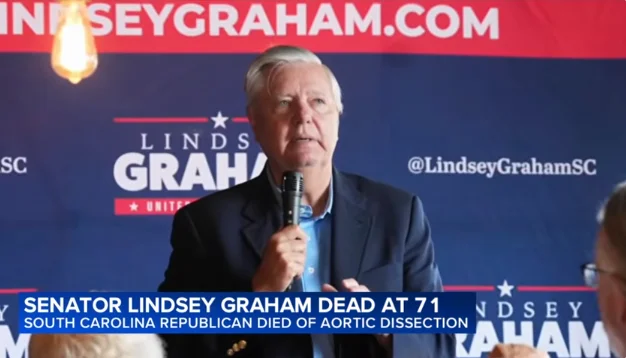
The death of long-serving Republican Senator Lindsey Graham has become one of the most significant moments in recent American politics. Combined with former Senate Majority Leader Mitch McConnell’s lengthy hospitalisation and upcoming retirement, it marks the gradual end of a generation of politicians who shaped Washington for decades.
Their departures are more than personal losses. They highlight a much larger transformation taking place across the United States as both major political parties face leadership uncertainty, ideological battles, and growing pressure from voters demanding change.
As America moves closer to the November midterm elections, questions about who will lead the next generation of politicians are becoming increasingly important.
A Changing Political Landscape
For many years, Lindsey Graham and Mitch McConnell were among the most influential Republican leaders in Washington.
Both played central roles in:
- Shaping conservative policies
- Influencing Senate legislation
- Guiding Republican election strategies
- Building relationships across Capitol Hill
- Influencing US foreign policy
With Graham’s sudden death and McConnell preparing to leave the Senate in January, the Republican Party is entering a period of major transition.
Political analysts believe these events symbolise the end of an era that has defined American politics for more than two decades.
Donald Trump Still Dominates Republican Politics
Although President Donald Trump remains the most influential figure in the Republican Party, questions are growing about what happens after his presidency.
Despite continuing to exercise enormous political influence, Trump is now in the later years of his political career, making succession an unavoidable topic within the GOP.
Many Republicans are beginning to ask:
- Who will become the next national conservative leader?
- Can the MAGA movement survive beyond Trump?
- Will future Republican leaders continue Trump’s political agenda?
These questions are expected to become even more significant following the upcoming midterm elections.
Lindsey Graham’s Unique Political Journey
Lindsey Graham’s political career was one of the most remarkable in modern American politics.
Earlier in his career, he was known as:
- A traditional conservative
- A strong supporter of American military intervention overseas
- A close ally of the late Senator John McCain
- A leading voice for Reagan-era Republican values
However, after Donald Trump’s rise to power, Graham gradually became one of the President’s closest allies.
His transformation surprised many political observers because he had once openly criticised Trump during the 2016 Republican presidential campaign.
Over time, Graham became one of Trump’s most trusted advisers inside the Senate.
The ‘Trump Whisperer’ on Capitol Hill
Many members of Congress viewed Graham as the politician who best understood Donald Trump’s thinking.
His relationship with the President allowed him to:
- Explain White House priorities to Senate Republicans
- Negotiate difficult political disputes
- Influence Trump’s decisions on foreign policy
- Help build support for key Republican legislation
Even Democratic lawmakers frequently acknowledged Graham’s willingness to communicate across party lines despite major political disagreements.
His ability to work with both Republicans and Democrats became increasingly rare in today’s highly polarised political environment.
Foreign Policy Was Central to Graham’s Career
Throughout his Senate career, Graham remained one of America’s strongest supporters of:
- Ukraine
- Israel
- NATO alliances
- Strong US military leadership
Only weeks before his death, Graham visited Ukraine to express continued American support during its war against Russia.
Many international leaders considered him an influential voice capable of persuading President Trump on foreign policy matters.
His death leaves a noticeable gap in Republican leadership on international affairs.
Mitch McConnell’s Departure Adds to Republican Uncertainty
While Republicans are mourning Lindsey Graham, they are also preparing for the retirement of Mitch McConnell.
McConnell first entered the Senate in 1984 and became one of the most powerful Republican leaders in modern history.
His achievements include:
- Leading Senate Republicans for many years
- Helping shape a conservative majority on the US Supreme Court
- Blocking Democratic legislative priorities
- Playing a decisive role in federal judicial appointments
His retirement marks another major leadership change within the Republican Party.
McConnell Updates Voters on His Health
Following weeks of public concern over his health, McConnell recently confirmed that:
- He did not suffer a stroke.
- Doctors found no signs of cancer or tumours.
- He experienced a fall followed by mild pneumonia.
- He is currently undergoing rehabilitation.
- He intends to return to the Senate as soon as possible before retiring in January.
Although he plans to complete his service, his departure represents another significant shift in Washington’s political balance.
Democrats Face Their Own Leadership Questions
Leadership uncertainty is not limited to Republicans.
The Democratic Party is also experiencing growing internal divisions over its future direction.
Progressive Democrats are increasingly challenging the party’s traditional leadership, arguing that stronger action is needed on issues including:
- Housing affordability
- Healthcare
- Income inequality
- Climate change
- Workers’ rights
Meanwhile, moderate Democrats worry that moving too far left could alienate independent voters.
These disagreements have complicated Democratic efforts to present a clear message ahead of the midterm elections.
Progressive Voices Continue to Gain Strength
One example of these changing dynamics is Michigan Senate candidate Abdul El-Sayed, who recently sought to broaden his appeal by explaining that he supports regulated capitalism rather than socialism.
His comments reflect a wider debate taking place inside the Democratic Party over how progressive its future should become.
Many younger Democrats are demanding fresh leadership and new policy ideas as older party figures gradually step aside.
Americans Continue to Worry About the Economy
Despite political debates in Washington, many American voters remain focused on everyday financial challenges.
Key concerns include:
- Rising housing costs
- Inflation
- Household affordability
- Healthcare expenses
- Economic uncertainty
- International conflicts affecting global markets
Critics argue that neither major political party has yet offered convincing long-term solutions to these issues.
Although President Trump has promoted what he describes as a new economic “golden age,” many voters continue to report financial pressures.
The Search for America’s Next Political Leaders
The departures of Graham and McConnell leave a significant leadership vacuum inside the Republican Party.
At the same time, Democrats continue searching for a new generation of national leaders capable of reconnecting with voters.
Political experts believe the coming years could determine:
- The future of the Republican Party after Trump
- Whether Democrats move further toward progressive policies
- The direction of American foreign policy
- The balance of power in Congress
- The long-term future of US democracy
Why Lindsey Graham’s Death Matters
Beyond party politics, Lindsey Graham’s death represents the passing of one of Washington’s most recognisable political figures.
Supporters admired his loyalty, foreign policy expertise and willingness to negotiate.
Critics questioned his changing political positions and close relationship with President Trump.
Regardless of political opinion, few dispute that Graham remained one of the Senate’s most influential voices throughout the 21st century.
His absence will be deeply felt inside the Senate as Washington enters a new political chapter.
What Comes Next?
The United States is entering one of its most important political transition periods in decades.
With Lindsey Graham gone, Mitch McConnell preparing to retire, Donald Trump’s political future under increasing scrutiny, and Democrats searching for new leadership, Washington is witnessing the gradual emergence of a new generation of politicians.
Whether these changes produce greater political unity or deeper division remains uncertain.
One thing is clear: the balance of power in American politics is shifting, and the decisions made over the next few years could shape the country’s future for decades to come.
Key Takeaways
- Lindsey Graham’s death marks the end of a major Republican political career.
- Mitch McConnell’s retirement signals another significant leadership change.
- Donald Trump’s long-term influence over the Republican Party faces new questions.
- Democrats continue to struggle with internal ideological divisions.
- Economic concerns remain voters’ highest priority.
- Both parties face growing pressure to develop a new generation of leaders.
- The upcoming midterm elections could reshape the future of American politics.
Sources
- CNN Politics
- Statements from President Donald Trump
- Interviews on CNN’s State of the Union
- NBC’s Meet the Press
- Public statements from Senator Mitch McConnell
- Reporting from Capitol Hill and official congressional sources
For Health & Fitness Products, Click => http://tinyurl.com/5n872ptd