
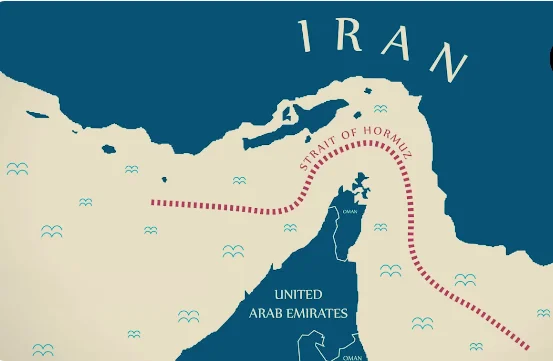
The strategically vital Strait of Hormuz has once again become the centre of a major geopolitical crisis, as tensions involving the United States, Israel, and Iran escalate into open conflict.
This narrow waterway, which connects the Persian Gulf to global oceans, is one of the most critical النفط (oil) transit routes in the world. Today, it faces severe disruption — but history shows this is far from the first time.
Why the Strait of Hormuz Matters
The Strait of Hormuz is often described as the world’s most important oil chokepoint.
Key Facts:
Around 20% of global oil supply passes through the strait.
It serves major oil producers in the Gulf region.
It is essential for transporting:
Crude oil
Natural gas
Commercial goods
Despite being bordered by Iran and Oman, the shipping lanes are considered international waters, allowing global maritime access.
However, Iran’s military presence and control of nearby islands give it significant strategic influence over the route.
Current Crisis: Shipping Comes to a Standstill
The latest conflict has caused near-total disruption in maritime traffic:
Tanker movement has largely stopped
Commercial ships face security threats and attacks
Oil and gas shipments are severely impacted
Major producers are cutting output due to blocked export routes
Although some vessels have managed to pass, the overall flow remains critically reduced, pushing global fuel prices sharply higher.
A History of Disruptions in the Strait of Hormuz
The Strait has been repeatedly caught in geopolitical tensions over the decades. Here’s a look at key historical flashpoints:
1980s: Iran-Iraq “Tanker War”
During the Iran-Iraq War, both sides targeted oil tankers in what became known as the Tanker War.
What Happened:
Tankers were attacked using naval mines and missiles
The United States intervened to protect shipping
U.S. forces clashed directly with Iran in 1988
A tragic incident saw a civilian Iranian airliner shot down, killing 290 people
Impact:
Shipping became extremely dangerous
Oil transport was disrupted but never fully stopped
2011–2012: Nuclear Sanctions Tensions
Tensions rose when Iran threatened to close the strait in response to Western sanctions over its nuclear programme.
Key Developments:
The European Union banned Iranian oil imports
The U.S. imposed strict financial and energy sanctions
Iran issued repeated closure threats
Market Impact:
Oil prices surged above $100 per barrel
Peak reached over $126 in March 2012
Prices later stabilised as tensions eased
2018: US Withdrawal from Nuclear Deal
In 2018, then-President Donald Trump withdrew from the Iran nuclear agreement.
What Followed:
Sanctions on Iran were reintroduced
Iranian President Hassan Rouhani renewed threats to close the strait
Outcome:
The strait remained open
Oil prices fluctuated but eventually declined
2019–2025: Ship Attacks and Seizures
This period saw repeated incidents raising fears over maritime security.
Major Incidents:
2019: Tankers damaged by limpet mine attacks
2021: Drone attack on an Israeli-linked tanker
2022–2024: Multiple foreign vessels seized by Iran
Although Iran denied involvement in some attacks, tensions led to:
Rising insurance costs for shipping
Increased military presence
Growing fears among global traders
Despite this, the strait remained operational.
June 2025: Israel-Iran 12-Day War
A brief but intense war between Israel and Iran again raised fears of closure.
Highlights:
The U.S. conducted strikes on Iranian nuclear facilities
Markets initially reacted with rising oil prices
Outcome:
No closure of the strait
Oil prices eventually fell below $67 per barrel
Traders doubted long-term disruption
What Happens Next?
The current crisis appears more severe than previous incidents, with:
Prolonged military conflict
Direct disruption to shipping
Immediate supply shortages
Key Risks Ahead:
Further escalation could fully block the strait
Global oil prices may continue to rise
Supply chains worldwide could face serious strain
Conclusion
The Strait of Hormuz has long been a geopolitical flashpoint, repeatedly threatened but rarely closed.
However, the present situation marks one of the most serious disruptions in decades, highlighting just how fragile global energy supply routes can be.
References
Associated Press (AP News)
International Energy Agency (IEA)
U.S. Energy Information Administration (EIA)
Maritime security and trade data platforms
For Health & Fitness Products, Click => http://tinyurl.com/5n872ptd